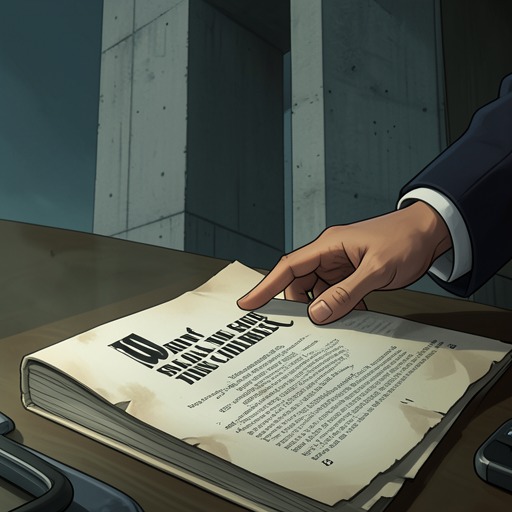
Grace's “I do not love you” poem
Our Chemical HeartsGrace's “I do not love you” poem is both a tangible keepsake and a measure of the distance between Grace Town and Henry Page. Henry has carried it in his wallet for months, treating its words as a prophecy; when he offers it back, Grace insists that she gave it to him, then tears it apart as she rejects the fantasy he has built around her.
The Poem as Keepsake
The poem has occupied a private, enclosed place in Henry's wallet for months. When he takes it out, he describes it as having festered there and as a prophecy from the beginning. The image makes the poem more than a message preserved on paper: Henry has kept its words close while interpreting them as an advance verdict on his relationship with Grace.
Henry's attempt to return it is a recognition that the poem belongs to Grace, but her response unsettles that simple exchange. She laughs, puts her arms around his neck, and tells him, “I don’t want it back, my darling Henry. I gave this to you.” The poem remains his because Grace chose to give it to him, even as its title and the history Henry attaches to it seem to predict rejection.
The Confrontation
The offer to return the poem comes amid Henry's direct question about whether Grace will ever be his girlfriend. Grace challenges the demand behind the question, asking what he wants from her and mocking the idea of making their relationship publicly official. The poem then becomes the object she uses to make her objection physical: she tears it in half repeatedly and lets the pieces fall onto the dampened sidewalk.
As she destroys it, Grace says, “You can’t project your fantasies onto people and expect them to play the part, Henry. People aren’t empty vessels for you to fill up with your daydreams.” Her words connect the poem to Henry's idealization of her: he has treated what he carries as confirmation of a story about them, while she insists that she is not a character obliged to fulfill his imagined role. She explains that she had wanted to see how he would react if she tried to be the version of herself he wanted, calling that imagined figure “Kintsukuroi Grace, all stitched up with gold seams.”
The Torn Pieces
Lola Leung steps between Henry and Grace and tries to redirect the encounter, but Grace leaves in an Uber. After she says she loves Dom, Lola collects the torn pieces of Pablo Neruda's poem from the ground and puts them in her bag. The paper has passed from Henry's wallet to the sidewalk and then into Lola's keeping; its fragmentation marks the collapse of the romantic meaning Henry had invested in it, while Lola's act preserves the physical remnants of the exchange.
The poem's role thus changes over the scene. At first it is an intimate object Henry carries as evidence of a prophecy; in Grace's hands it becomes a rejection of the assumptions he has attached to it. Its destruction does not erase the history of her gift, but it makes visible the conflict between the meaning Henry has imposed and the meaning Grace claims for herself.